Klenz
Automated Ultrasonic Instrument Cleaner
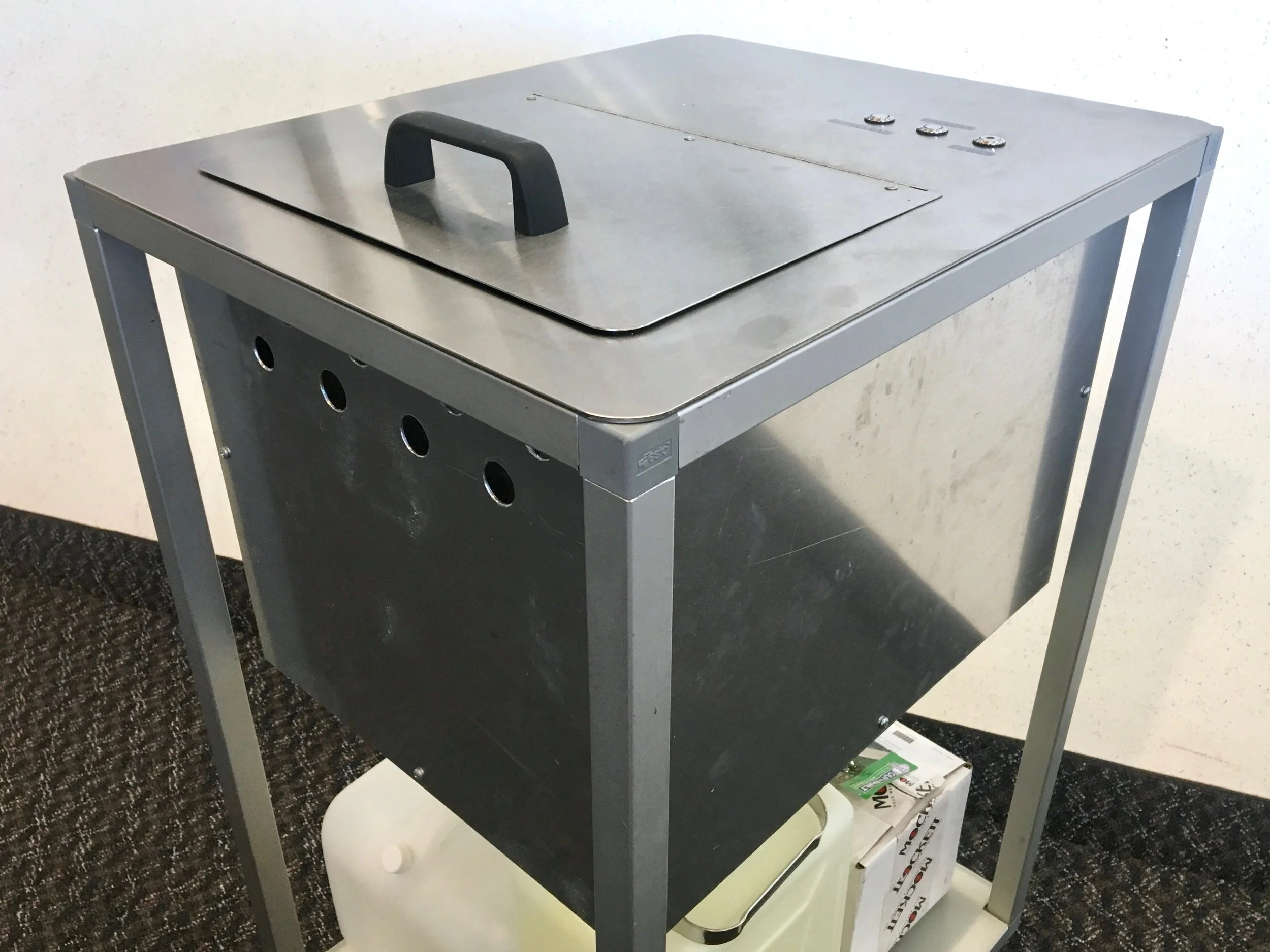
This machine automates the instrument washing process for the dental and medical industries
Version 2.0 of machine (shown below) currently protected under US Patent # US7985301B2
Originally developed by dentist Omelan Kotsopey and inventor Alex Prokopenko
Further design improvements and machine version 3.0 to be developed by Andrew Kotsopey beginning in 2018
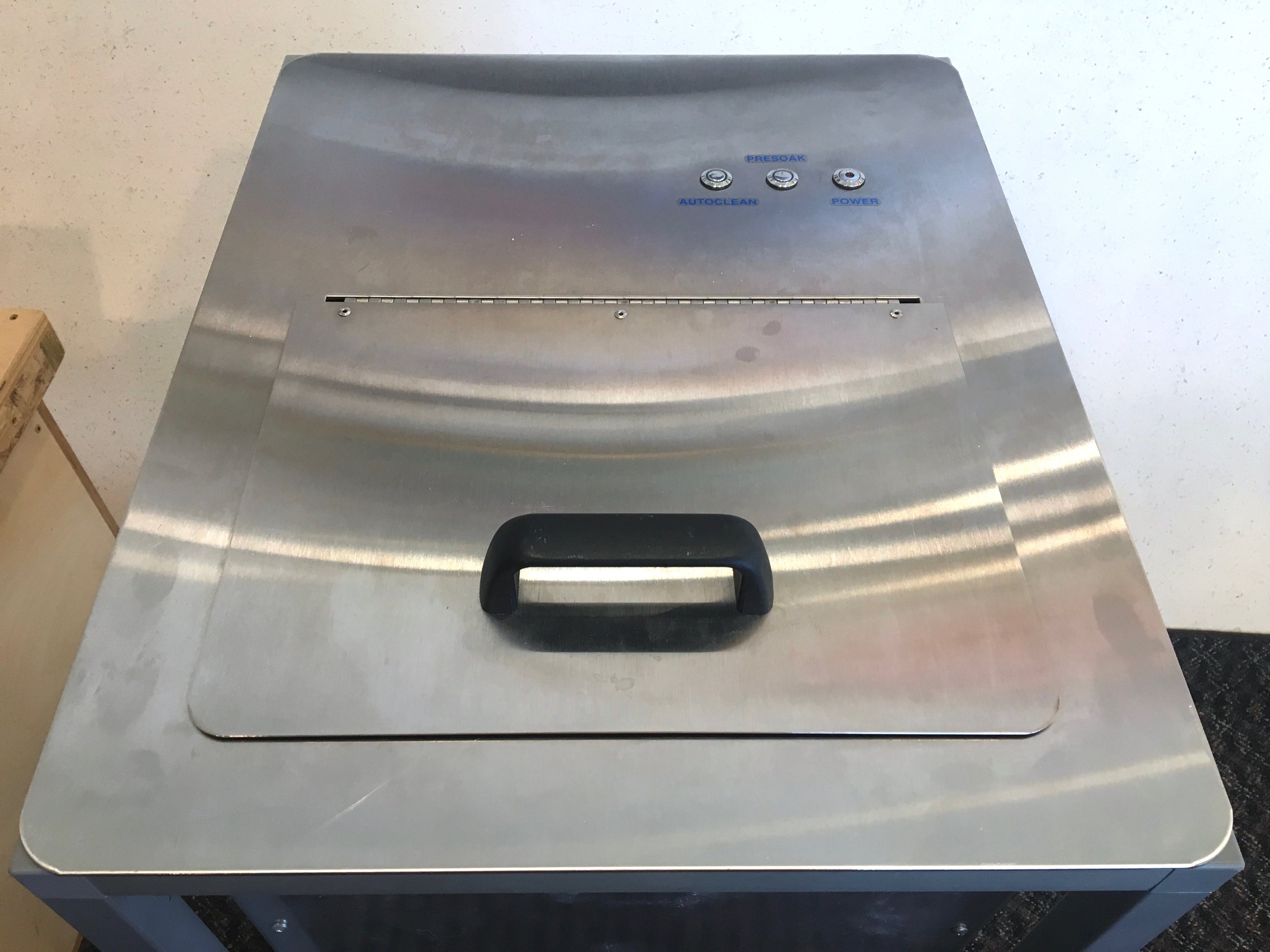
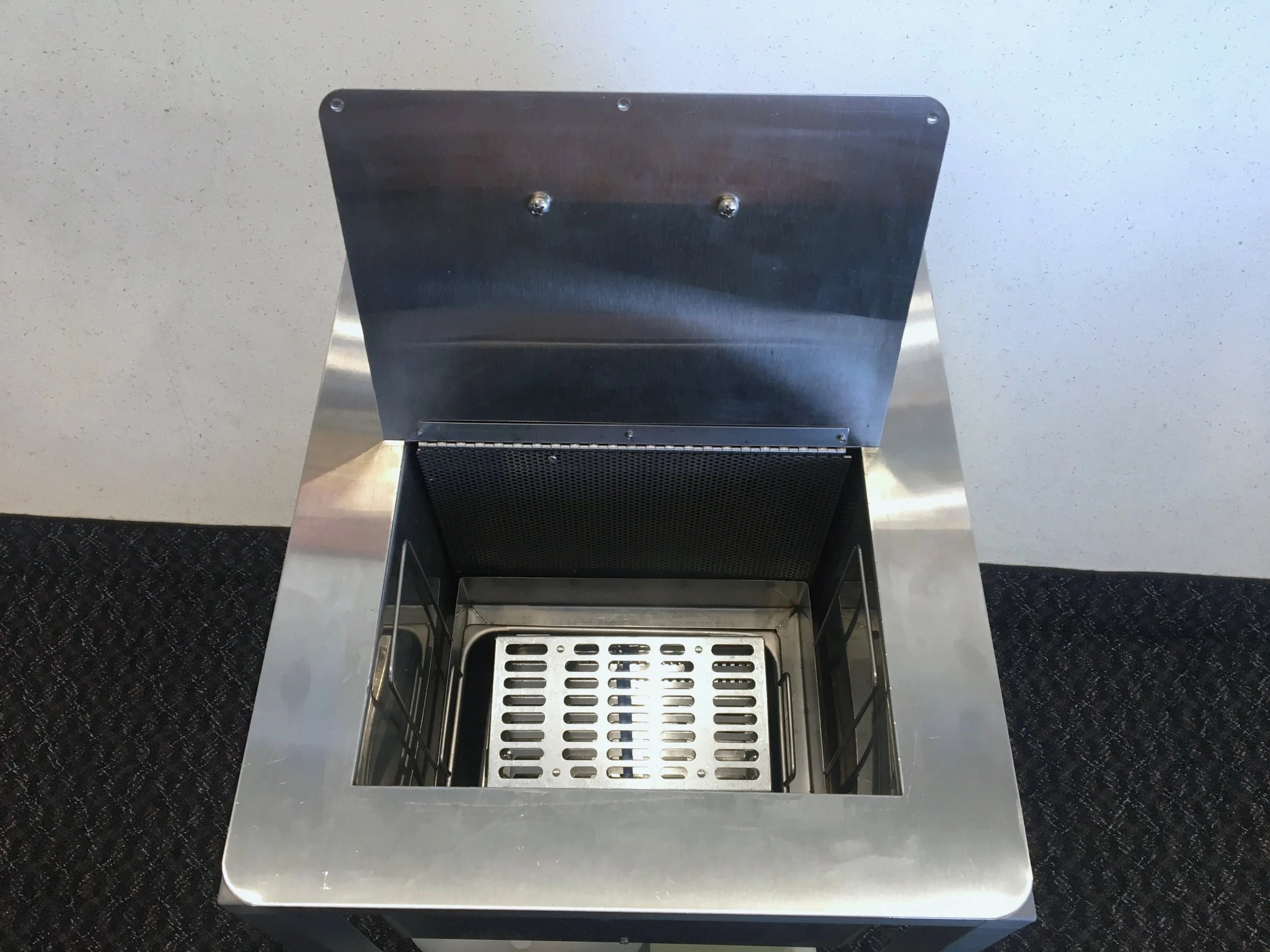
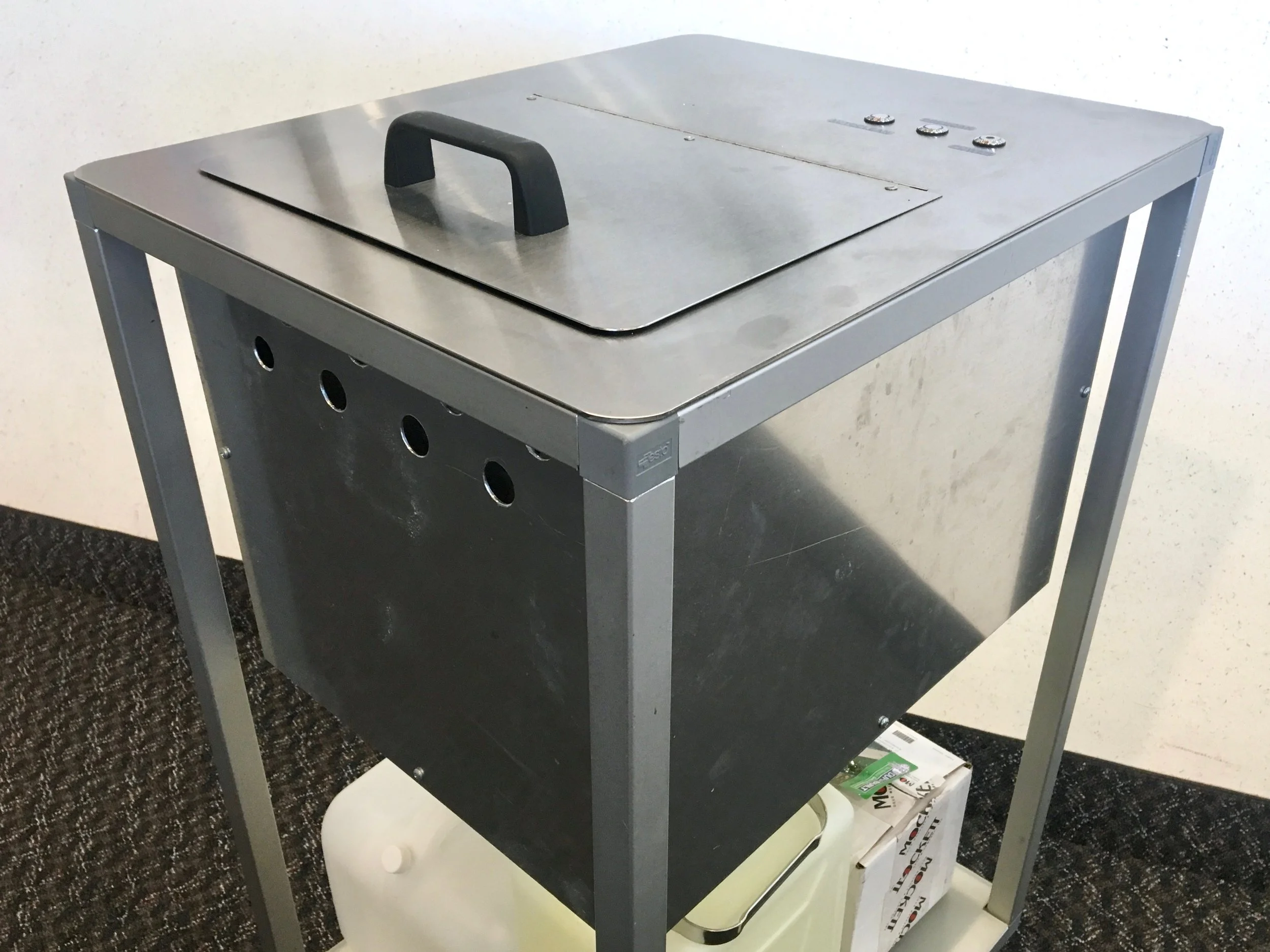
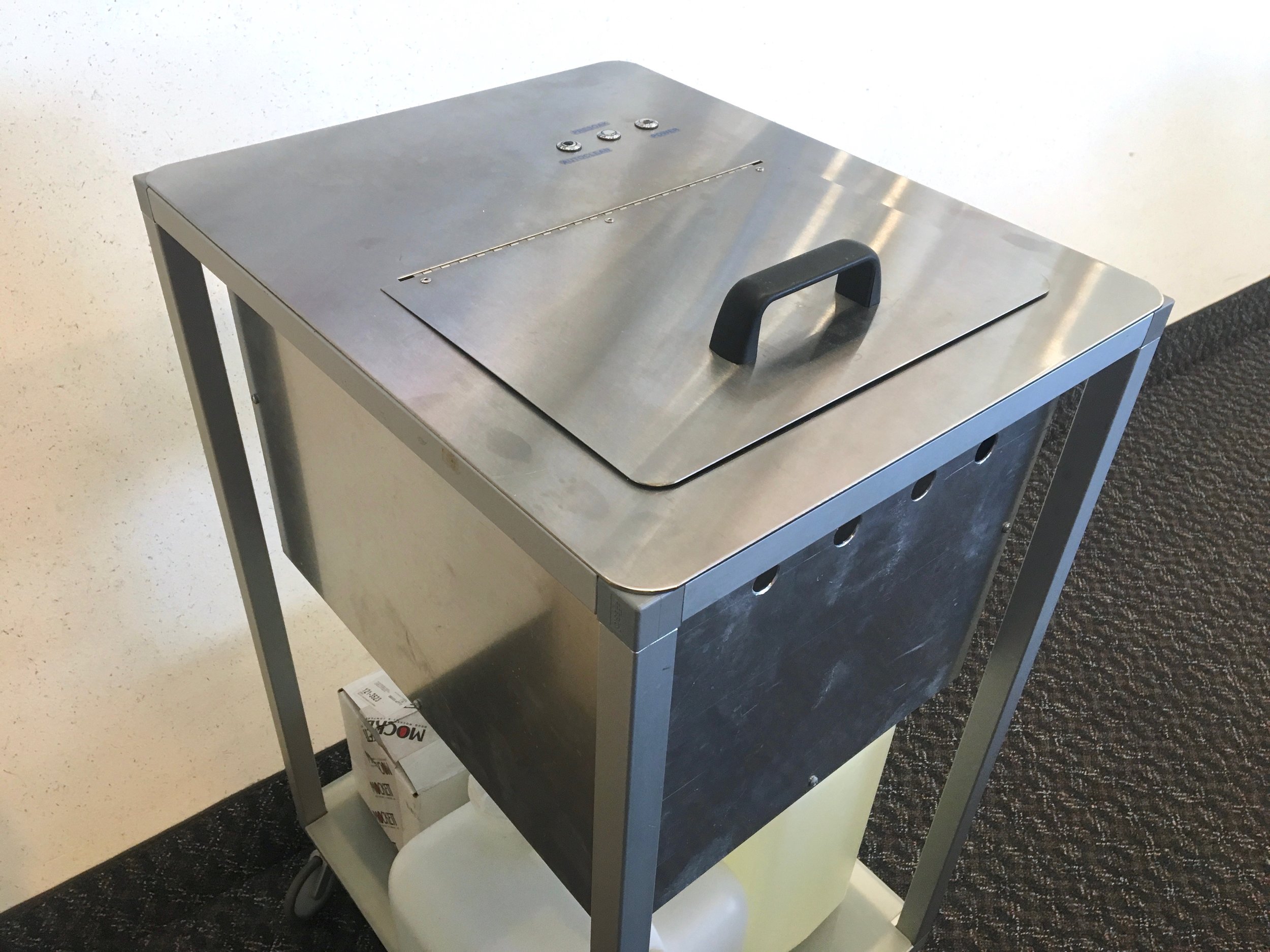
As defined by the CDC, contaminated dental instruments must be soaked, washed, rinsed and dried before sterilization
This machine automates the tedious cleaning process saving dental practices time and money
Automating the cleaning process greatly improves worker safety by reducing the handling of sharp and contaminated instruments
Installation is simple as a stand alone unit or sunk into a countertop, requiring only a standard drain, hot water connection and 110V power
Operation & Functionality
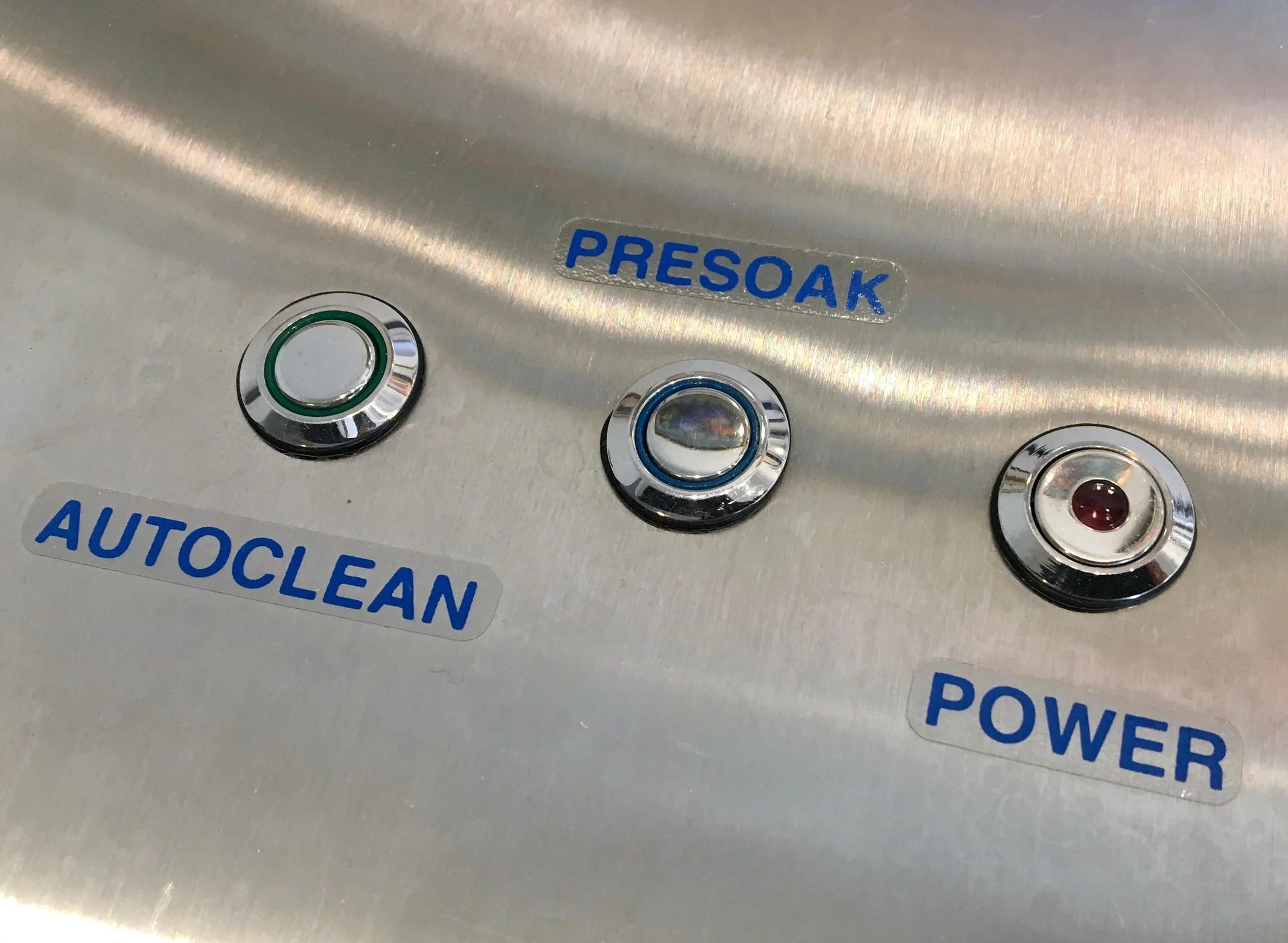
- Power on machine and press 'PRESOAK' button to begin
- Tank automatically fills with hot water
- Machine automatically dispenses cleaning solution
- Place dirty instruments in the machine (loose or in cassettes)
- Press 'AUTOCLEAN' to start the automatic cleaning cycle
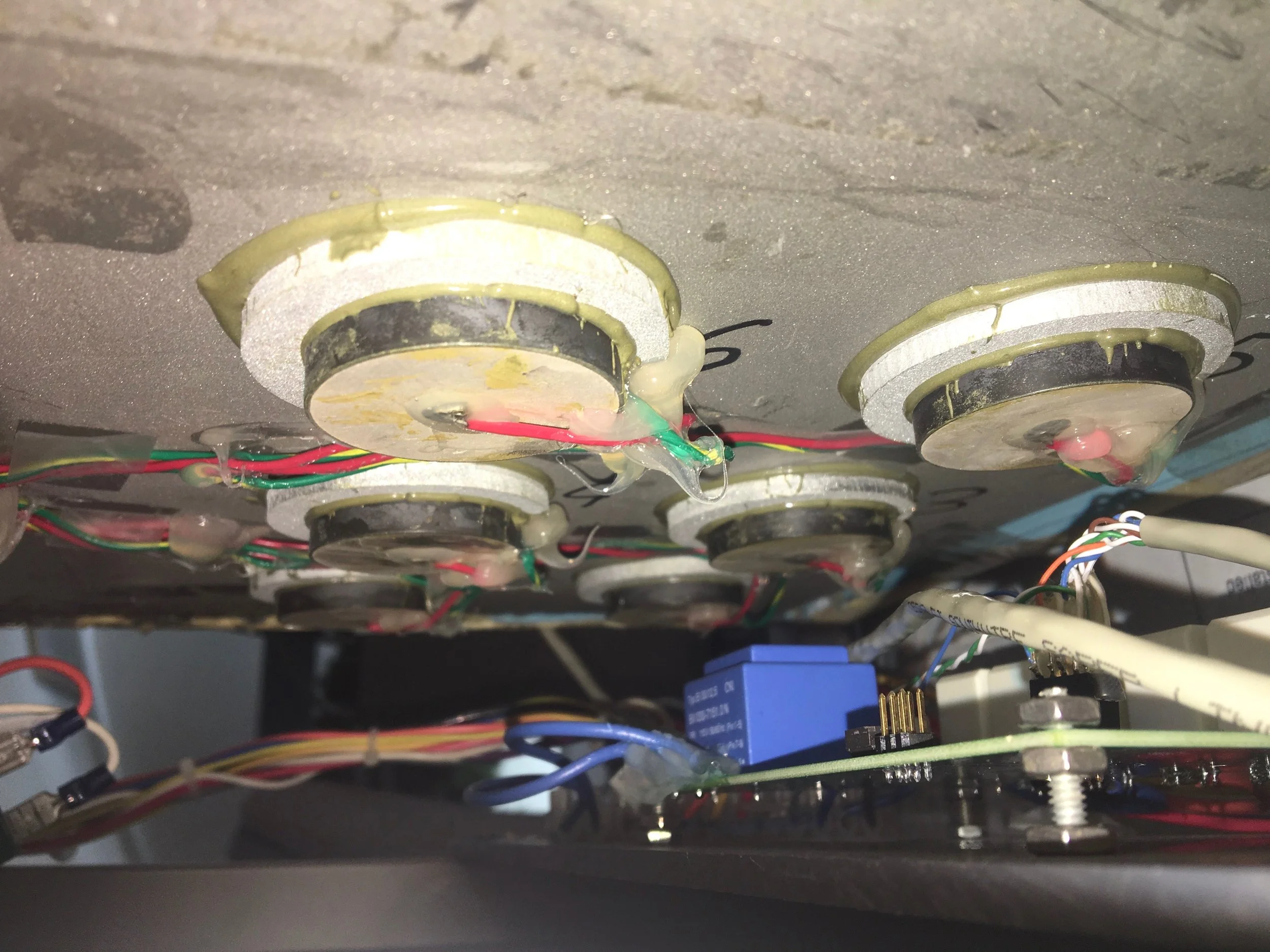
- Ultrasonic transducers engage to clean instruments
- Submerged heater keeps cleaning solution warm
- Cleaning solution drained from tank
- Tank filled with clean water to rinse instruments
- Tank drained to complete clean rinse
- Heater and fan engage to begin drying cycle
- 'AUTOCLEAN' light turns off and cleaning cycle is complete
- Remove the instruments and sterilize
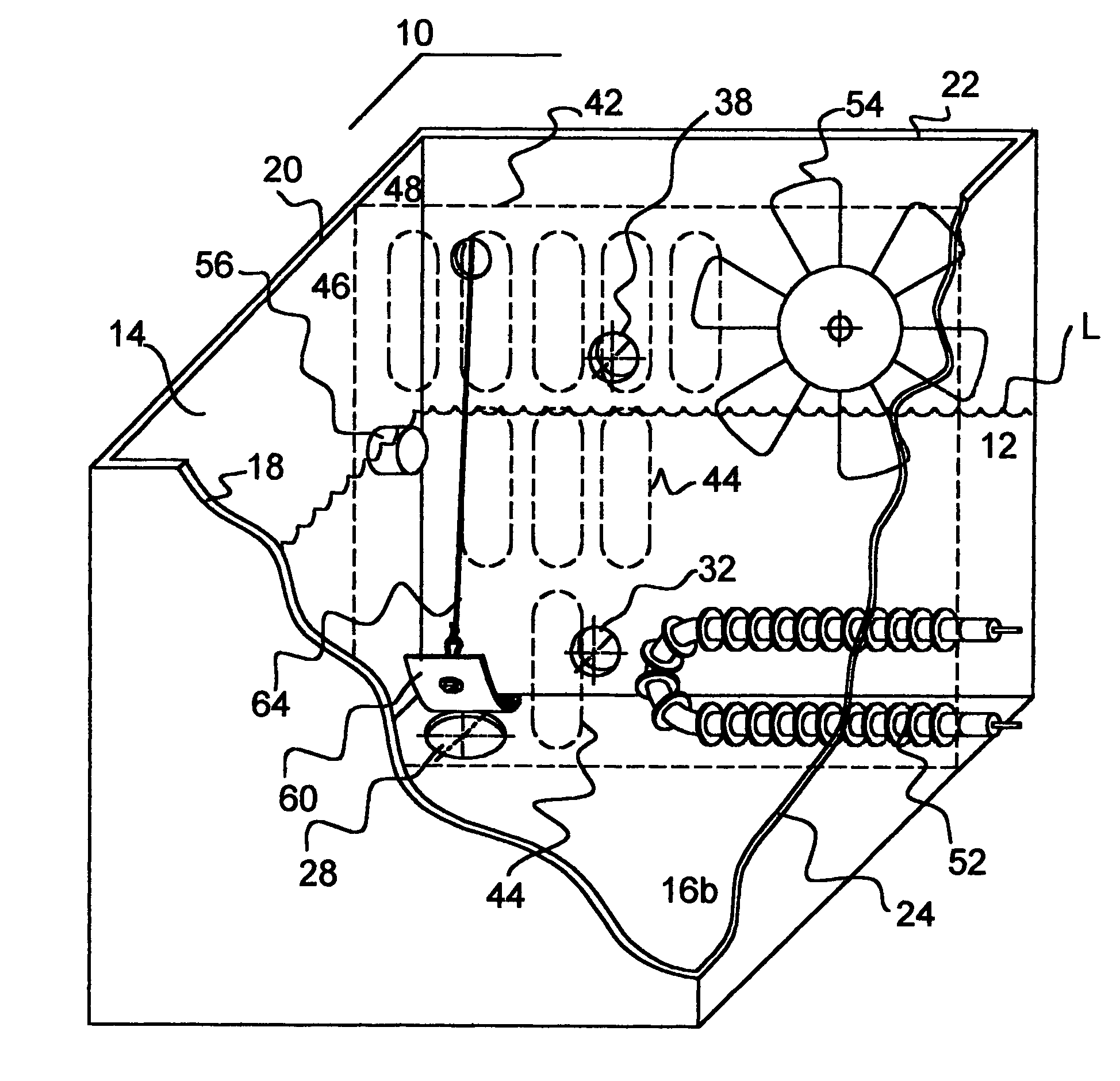
Patent Abstract
The present invention discloses an ultrasonic cleaner in which an automated ultrasonic cleaning operation is executed using an aqueous solution. The cleaner includes a tank having a valve means in fluid communication therewith, a bottom tank portion with at least one drainage aperture therethrough and at least one tank wall depending therefrom to provide a solution retention region. At least one ultrasonic transducer is removably secured to one of the tank bottom and tank wall. A partition in the solution retention region has at least one aperture defined therethrough and defines a service section and a support section thereby. A trigger means operatively disposed in the support section comprises a drainage flapper in operable communication with a signal means between a first rest position, in which the flapper impedes flow of the solution through the drainage aperture, and a second elevated position, in which the flapper is elevated relative to the drainage aperture to facilitate unimpeded fluid flow therethrough.
Current US Patent # US7985301B2
Previous US Patent # US6102056A
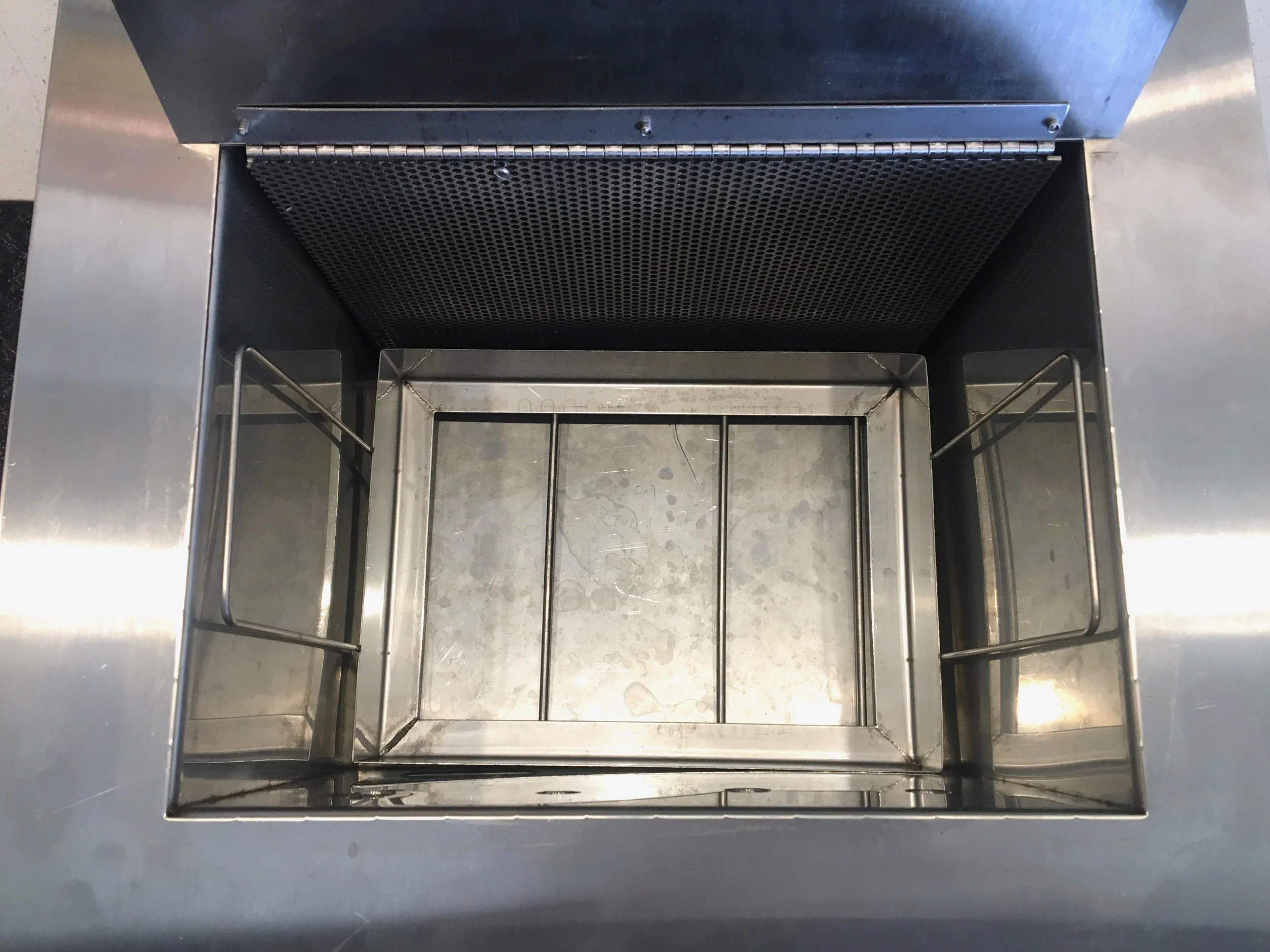
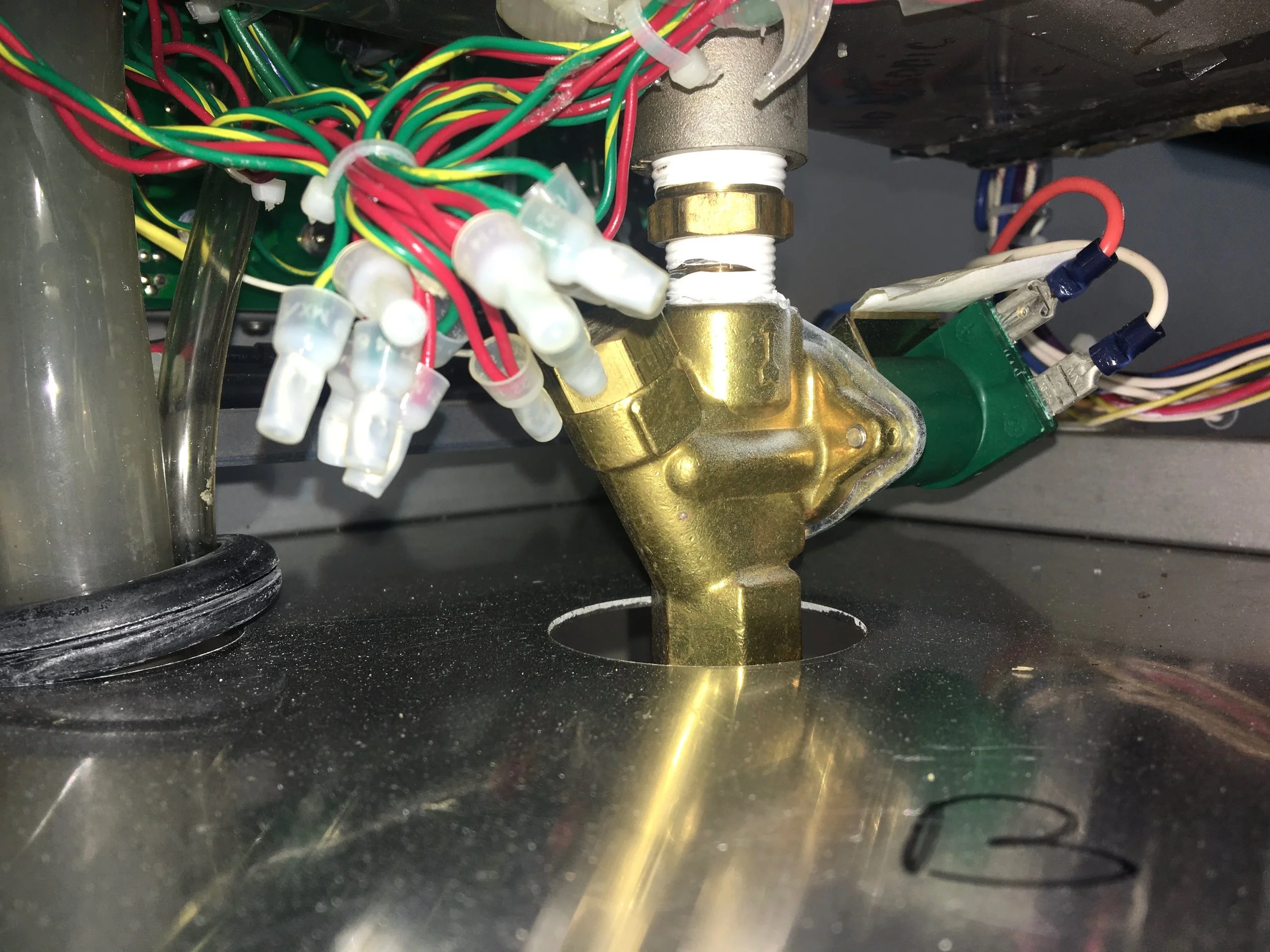
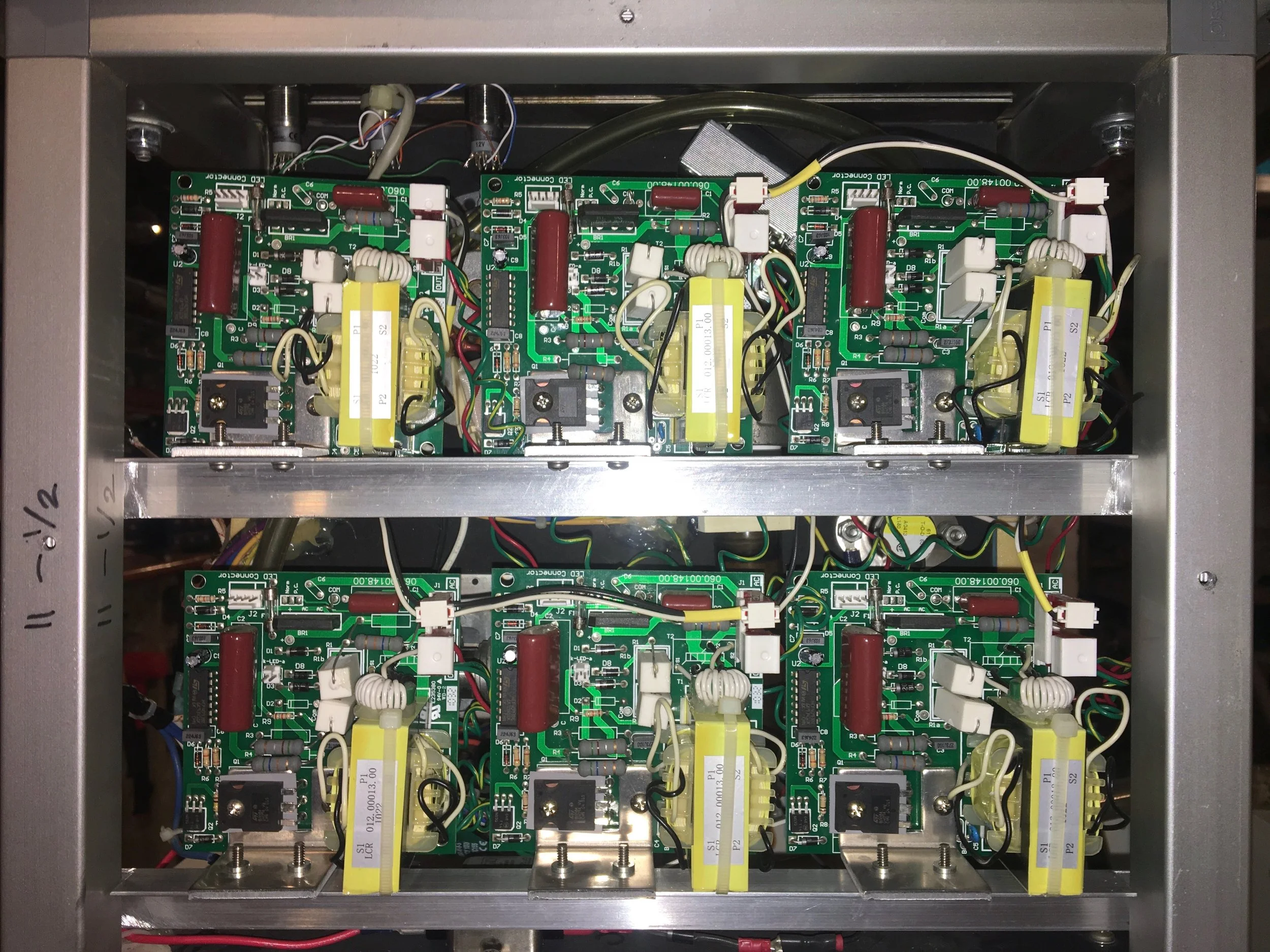
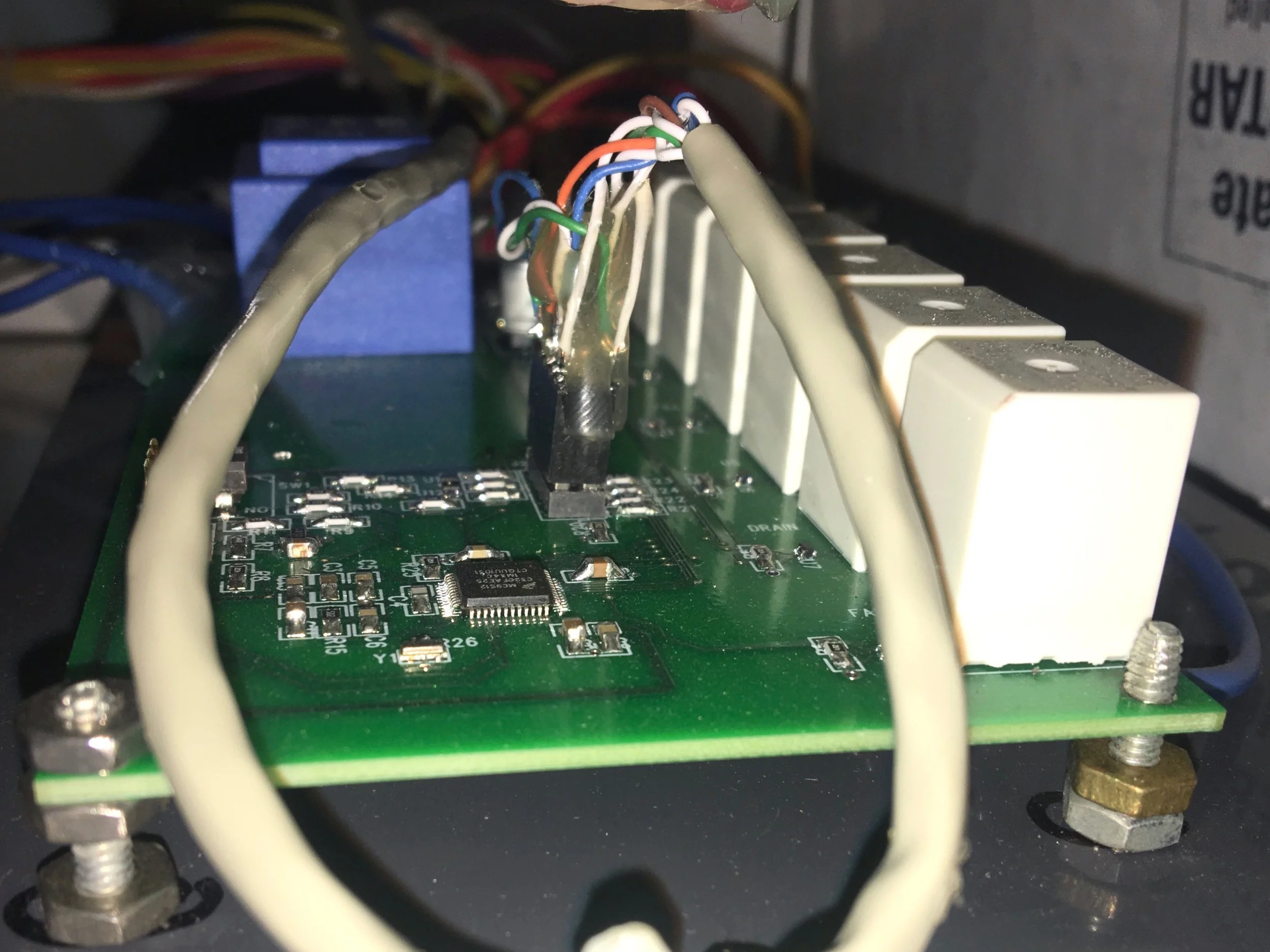
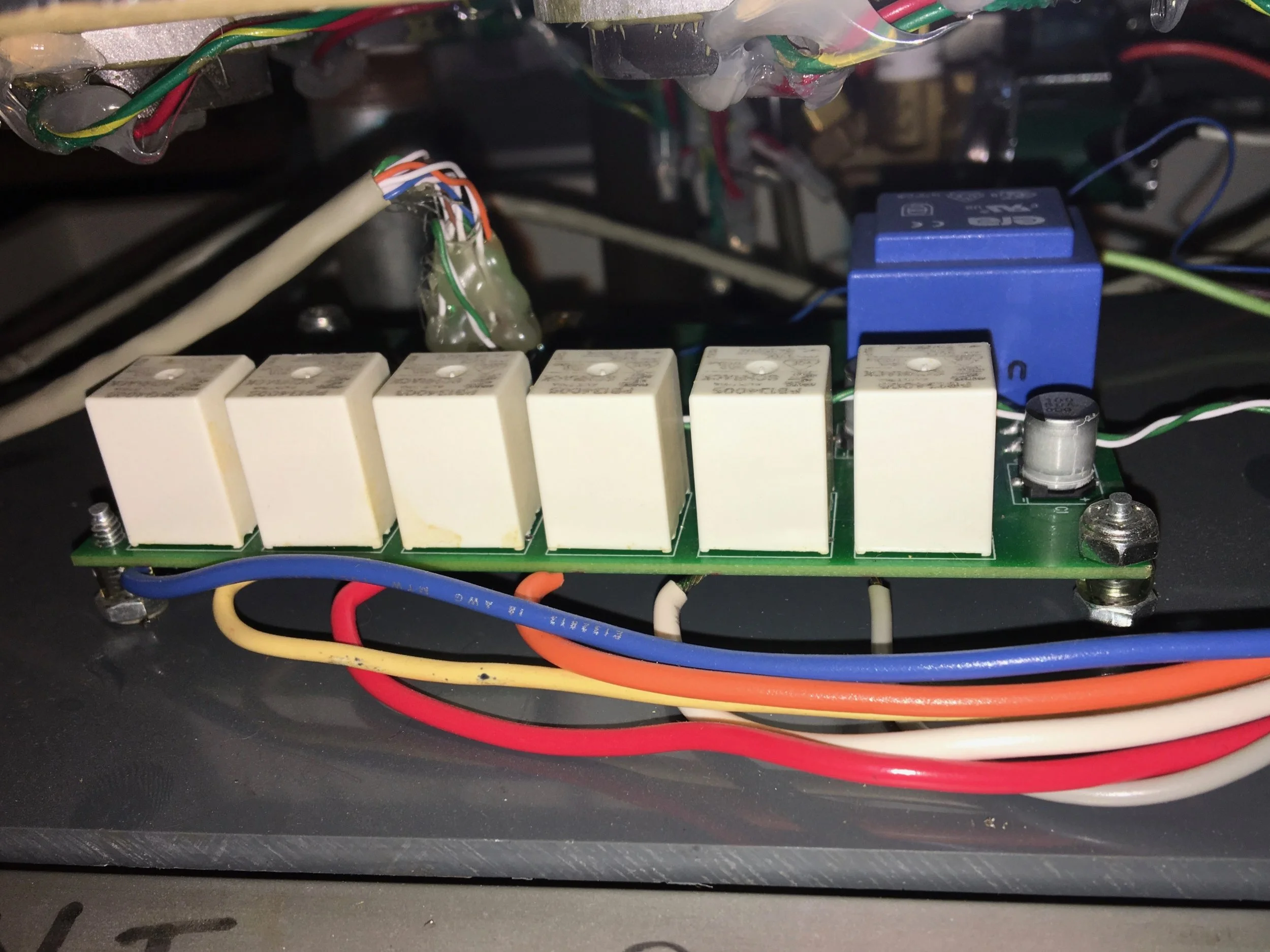
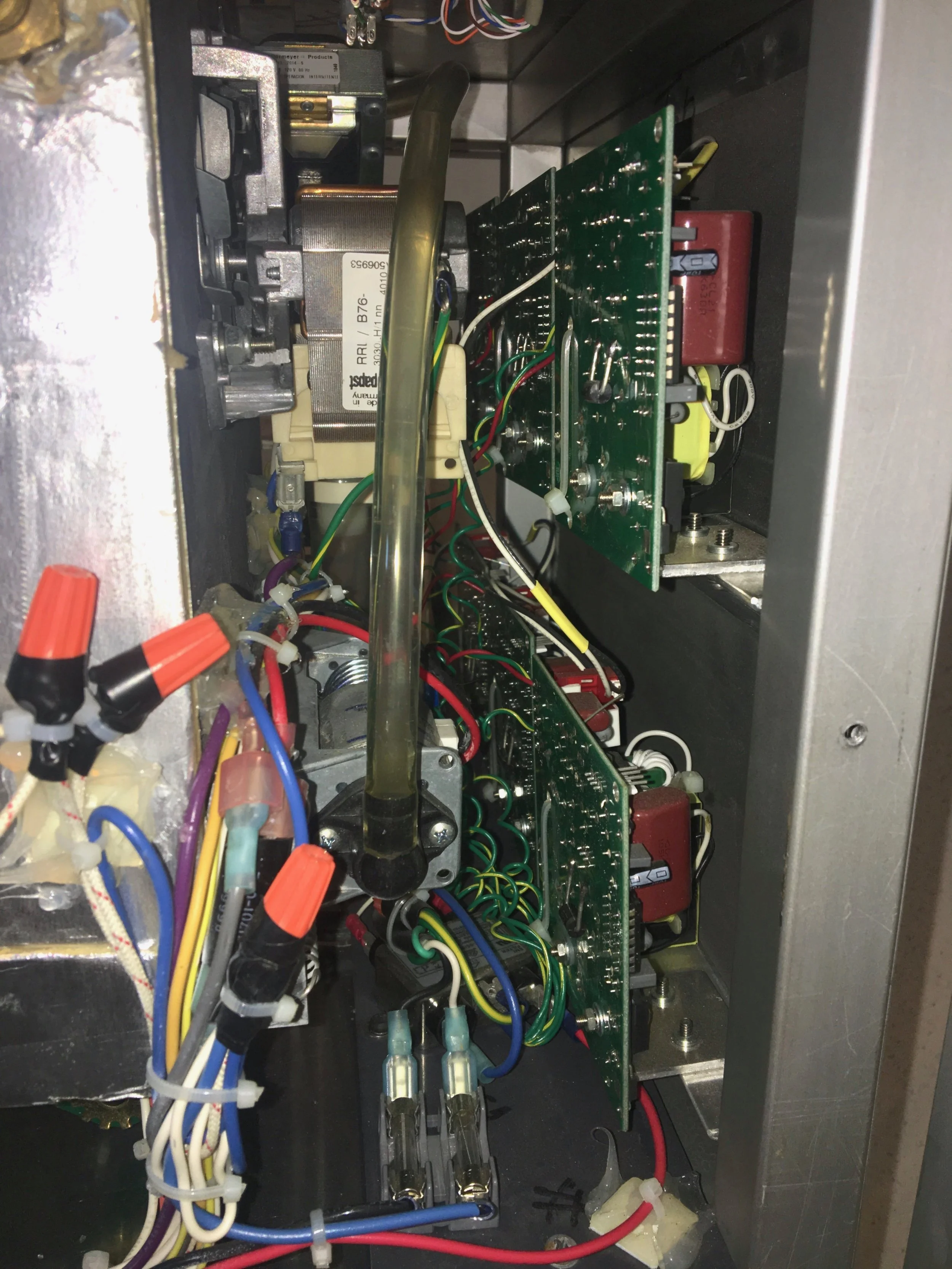
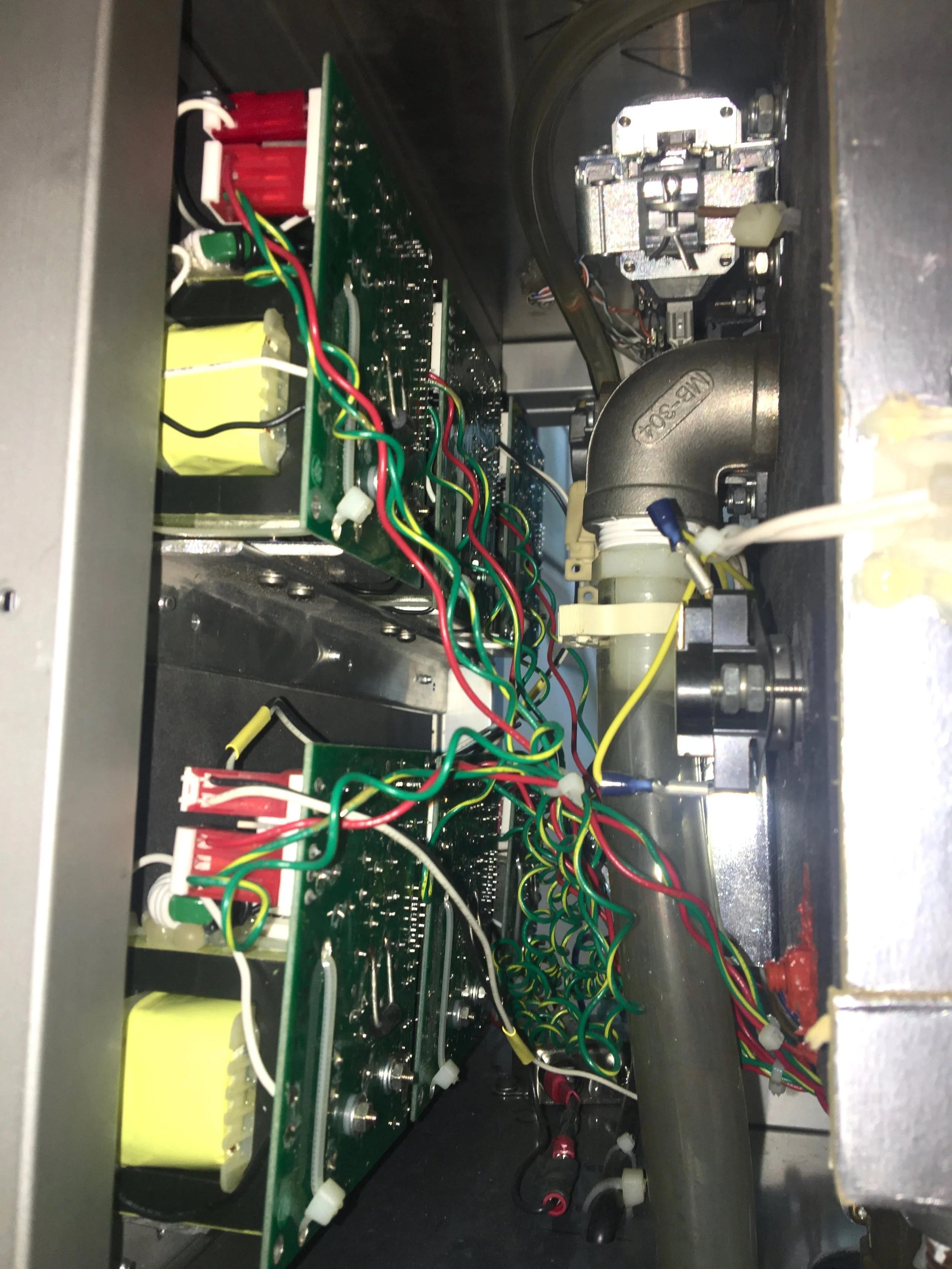
Version 2.0
By Alex Prokopenko & Omelan Kotsopey
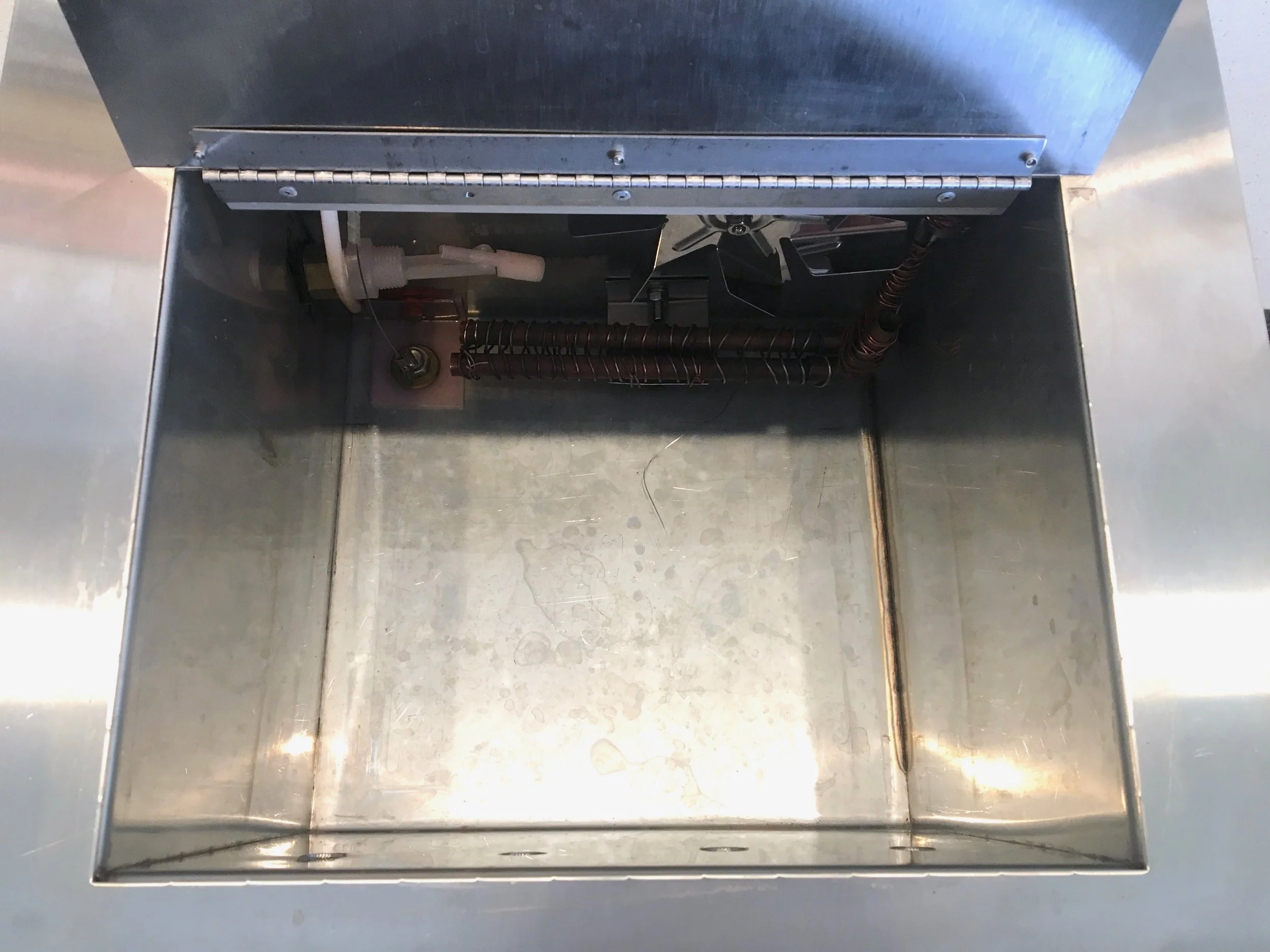
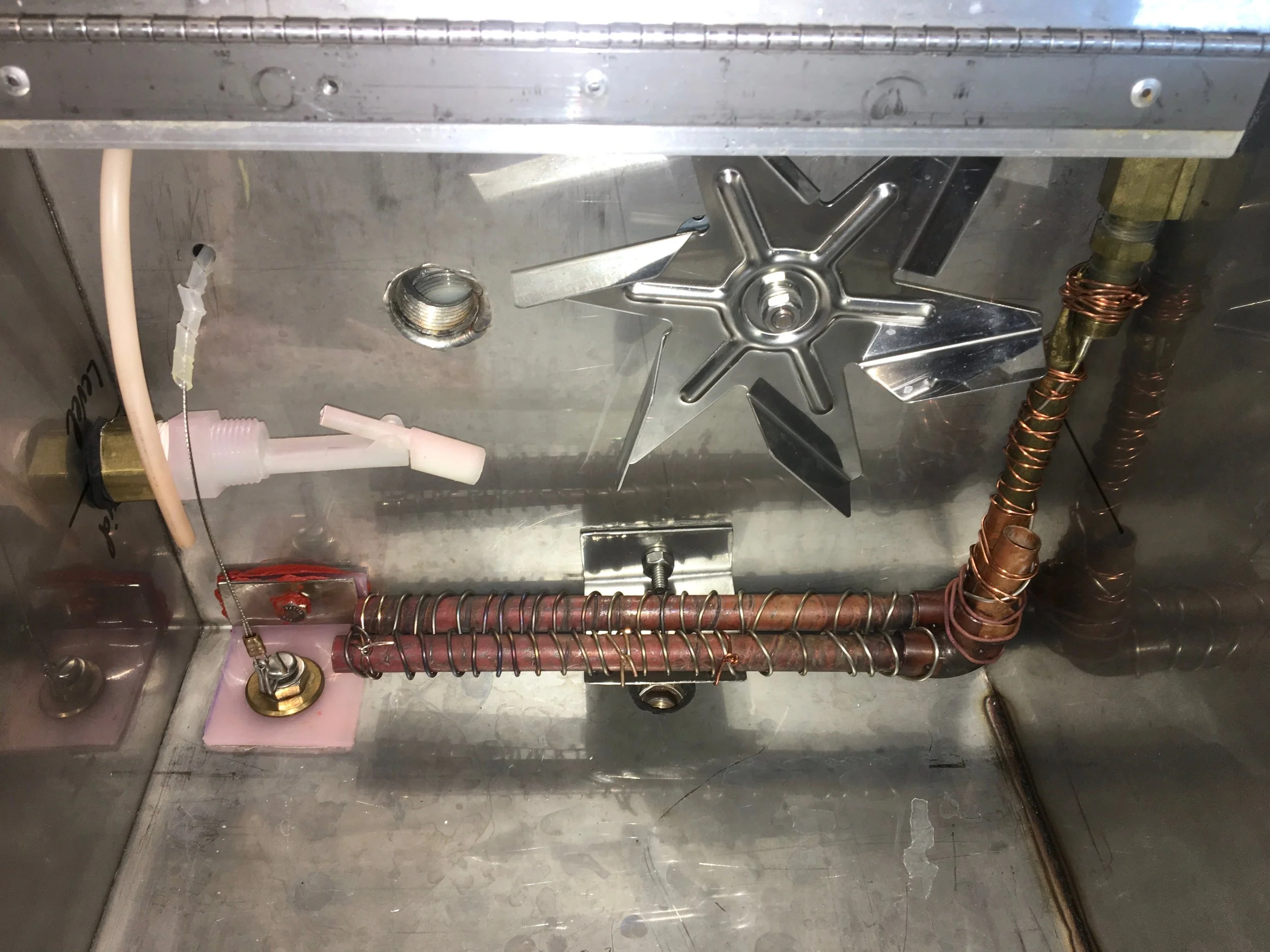
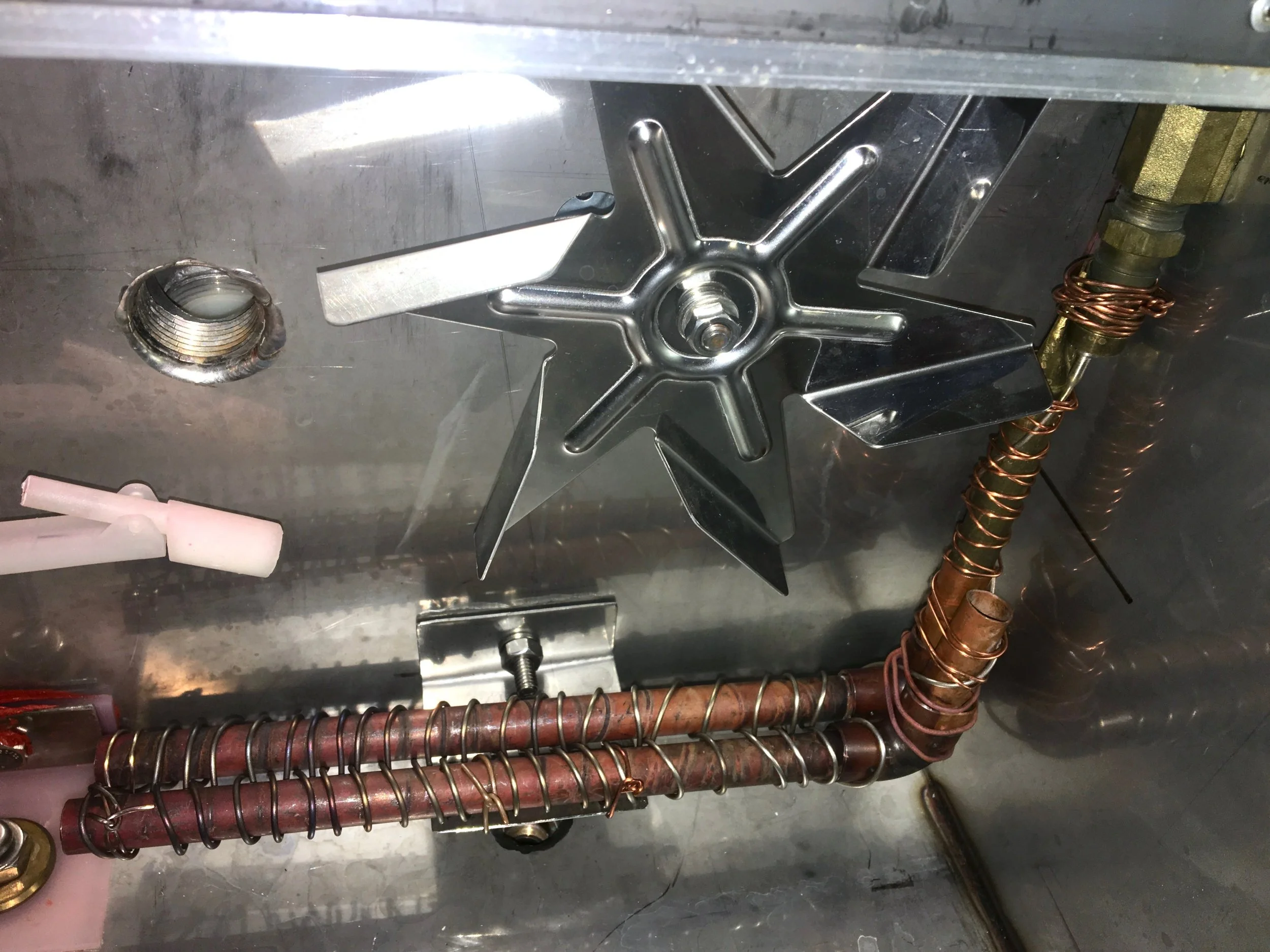
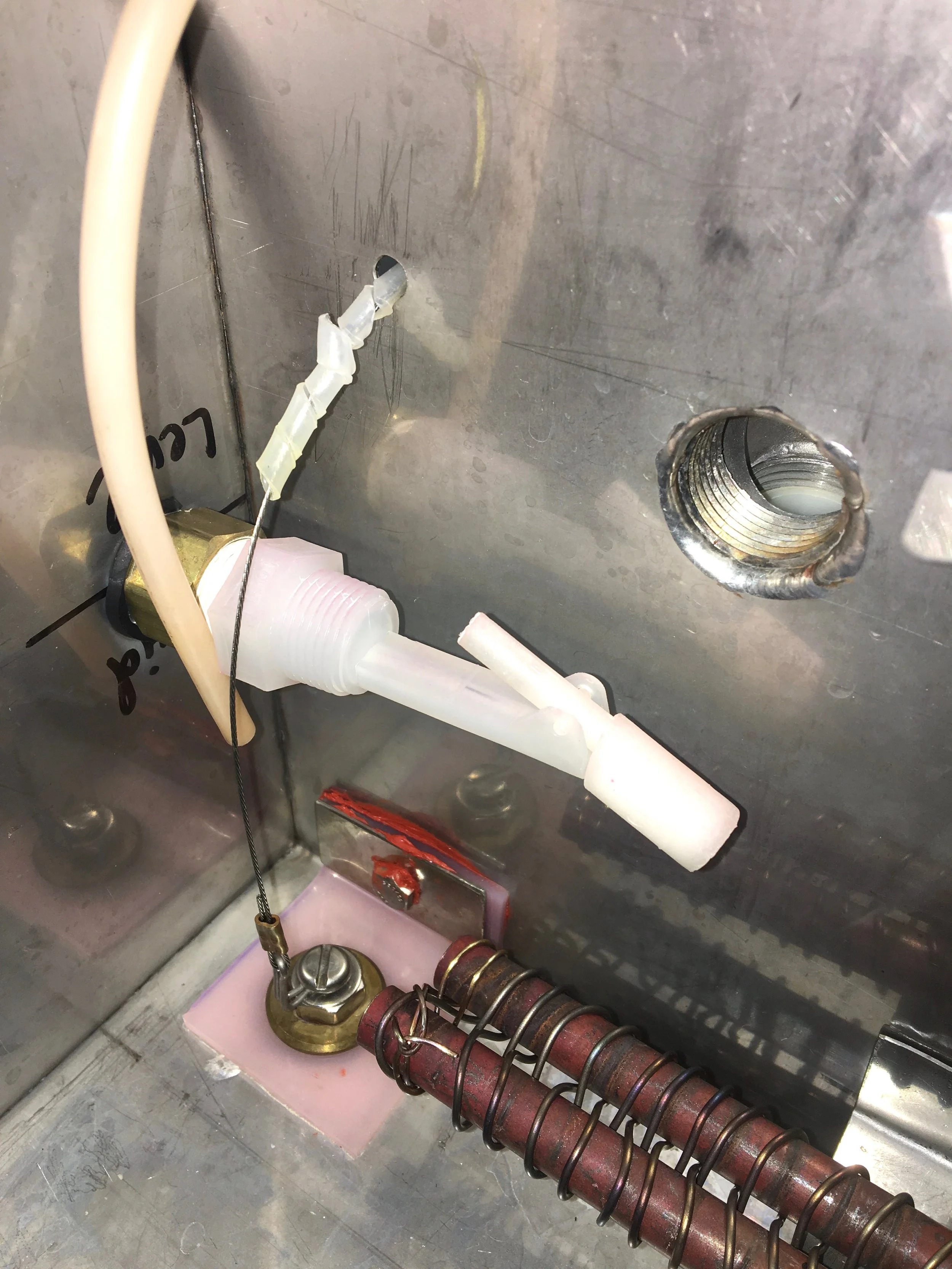
Proposed 3.0 Improvements
By Andrew Kotsopey
- Redesign heater to improve drying performance
- Heater must function well while submerged (heating cleaning solution) and in air (drying instruments)
- Improve ventilation paths of moist air during drying cycle
- Reduce overall machine size by rearranging and redesigning components
- Relocate drying fan to significantly reduce tank height
- Relocate control PCB from below tank and adjust drain piping to reduce machine height
- Improve tuning and placement of ultrasonic transducers
- Rearrange electrical components away from liquid carrying components
- Place power supplies and control PCB behind front wall panel for easier maintenance access
- Create new cabinet and top flange options to accommodate different installation types
- Machine can easily be installed in countertops in place of existing sinks, reusing existing drain and water line
- Different top flange sizes can be offered to the customer to fit any size countertop opening
- Replace hinged lid with concealed sliding door
- Hinged lid is prone to being bent by user, concealed sliding lid provides lower profile design
- Add limit switch to sliding door lid to sense if door is opened during clean cycle
- Implement touch sensitive controls on top panel instead of physical buttons
- Solid top panel with touch controls will be less susceptible to water damage and easier to clean
- Create new version of microcontroller PCB with greater adjustability and monitoring capabilities
- Add sensors to monitor performance of ultrasonic transducers
- Add beeper for audible feedback when starting cycle and to indicate when finished
- Program ability for an extended ultrasonics cycle if cleaning heavily soiled instruments
- Improve rinse cycle by spraying instruments instead of filling and draining tank
- Some soap remains after fill and drain rinse, spraying will clear all soap
- Spray rinse cycle can be quicker and use less water
- Improve soap dispensing with notification when soap levels are low
- Reduce overall cost of machine